The thinking behind The Agency.
Insights and analysis on third-party risk management, vendor security, regulatory compliance, and the agentic shift reshaping how TPRM teams actually work.
From the team.
 Risk Management
How to Create a Cybersecurity Incident Response Plan?
A cybersecurity incident response plan (CSIRP) is essential for businesses to respond quickly and effectively to cyberattacks, minimizing damage and ensuring recovery. This blog post outlines the six phases of a CSIRP, including preparation, identification, containment, eradication, recovery, and lessons learned. It also covers the importance of assembling an incident response team, identifying vulnerabilities, and regularly testing and updating the plan. Additionally, it highlights how RiskXchange supports businesses in strengthening their cybersecurity efforts and incident response capabilities.
Read more
Access Control: The essential cybersecurity practice
Access control is a critical component of cybersecurity, ensuring that only authorised individuals can access sensitive data and systems. By implementing logical and physical access controls, organisations can manage authentication, authorisation, and auditing effectively. From ABAC to RBAC, the various types of access control support regulatory compliance and help mitigate security risks. RiskXchange empowers businesses with real-time visibility and AI-driven cybersecurity risk ratings to strengthen access management and reduce attack surfaces.
Read more Cybersecurity
Peer comparisons of cyber risk ratings: how they support your firm’s cyber assessment processes
Peer comparisons of cybersecurity risk ratings enable organisations to benchmark security performance, identify gaps, and optimise resource allocation. By aligning with industry standards, businesses can set targeted security goals, improve reporting accuracy, and enhance their overall cyber posture. RiskXchange empowers organisations with AI-driven, real-time insights to support proactive and strategic cybersecurity improvements.
Read more Cybersecurity
A guide to cybersecurity metrics and KPIs
This guide explores the importance of cybersecurity metrics and key performance indicators (KPIs) in measuring, managing, and improving an organisation’s security posture. It highlights the role of KPIs such as mean time to detect/respond/contain, intrusion attempts, virus monitoring, and phishing attacks, while outlining the CARE framework (Consistency, Adequacy, Reasonableness, Effectiveness). RiskXchange empowers organisations to track these metrics effectively to improve vendor security, communicate risk to stakeholders, and enhance cybersecurity outcomes.
Read more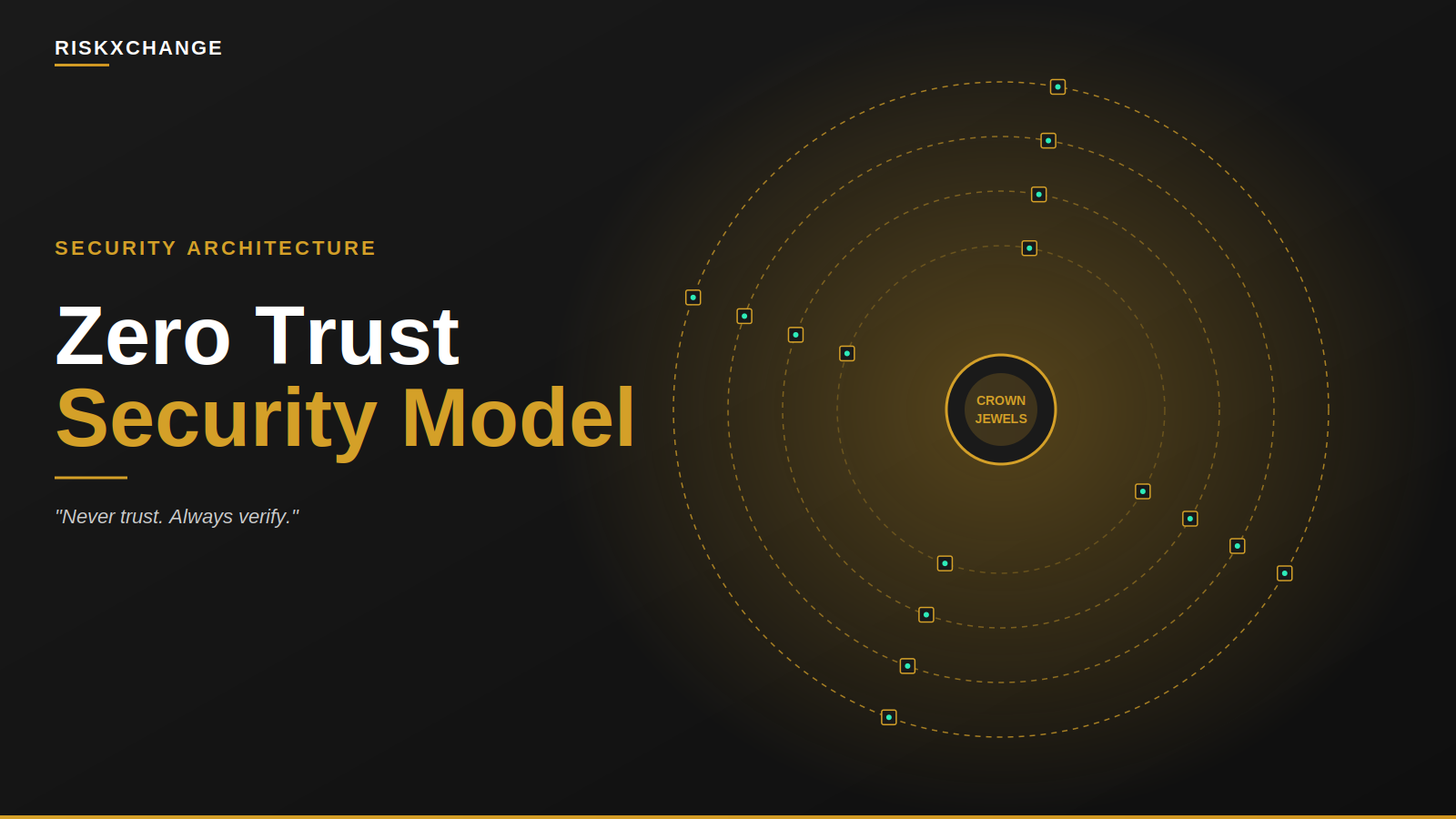 Cybersecurity
What is a zero trust security model?
The zero trust security model, pioneered by John Kindervag, is a cybersecurity approach that operates on the principle of “never trust, always verify.” Unlike traditional perimeter-based defenses, zero trust continuously authenticates and authorizes every user and device, whether inside or outside the network. It incorporates principles such as least-privilege access, micro-segmentation, and multi-factor authentication to reduce data breaches and provide full visibility across an organization’s digital ecosystem. RiskXchange supports businesses in implementing zero trust frameworks with innovative, AI-powered cybersecurity solutions.
Read more.png) Cybersecurity
CybersecurityWhat is an IT security gap?
This guide explains what an IT security gap is and why identifying and addressing these gaps is critical for protecting a company's digital assets. It outlines the process of conducting an information security gap analysis and highlights eight of the most common security gaps businesses face, such as poor patch management, IoT vulnerabilities, employee risk, and lack of threat intelligence. The article concludes with how RiskXchange can support organisations in identifying and closing their security gaps.
Read moreStop reading. Start running TPRM differently.
Book a 30-minute call and we'll have NOVA, ARIA and REX produce a complete posture report on a vendor of your choice inside 24 hours.